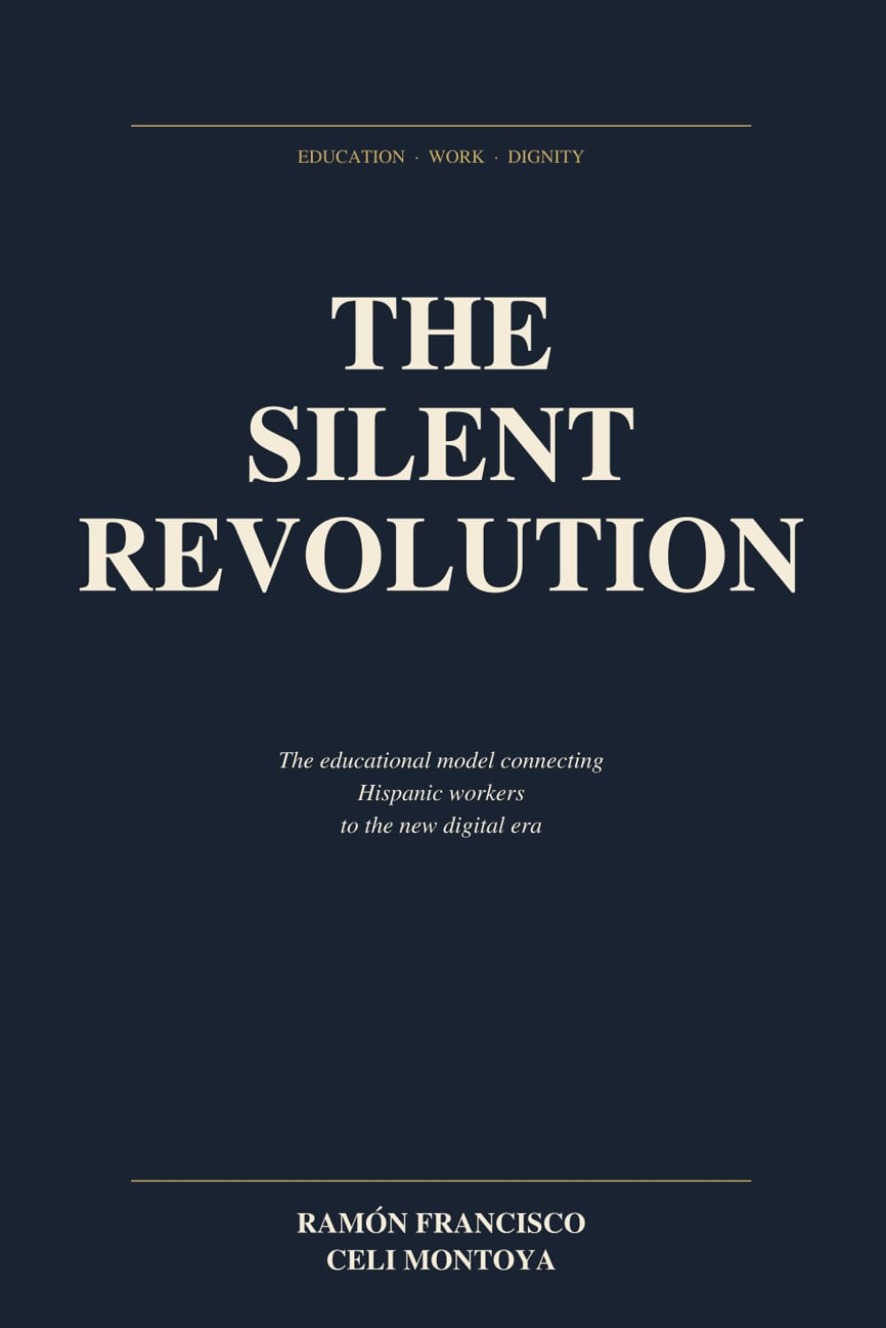
The Silent
Revolution
A bilingual model, born in the classroom.
A shortage of technicians.
A workforce standing
on the site.
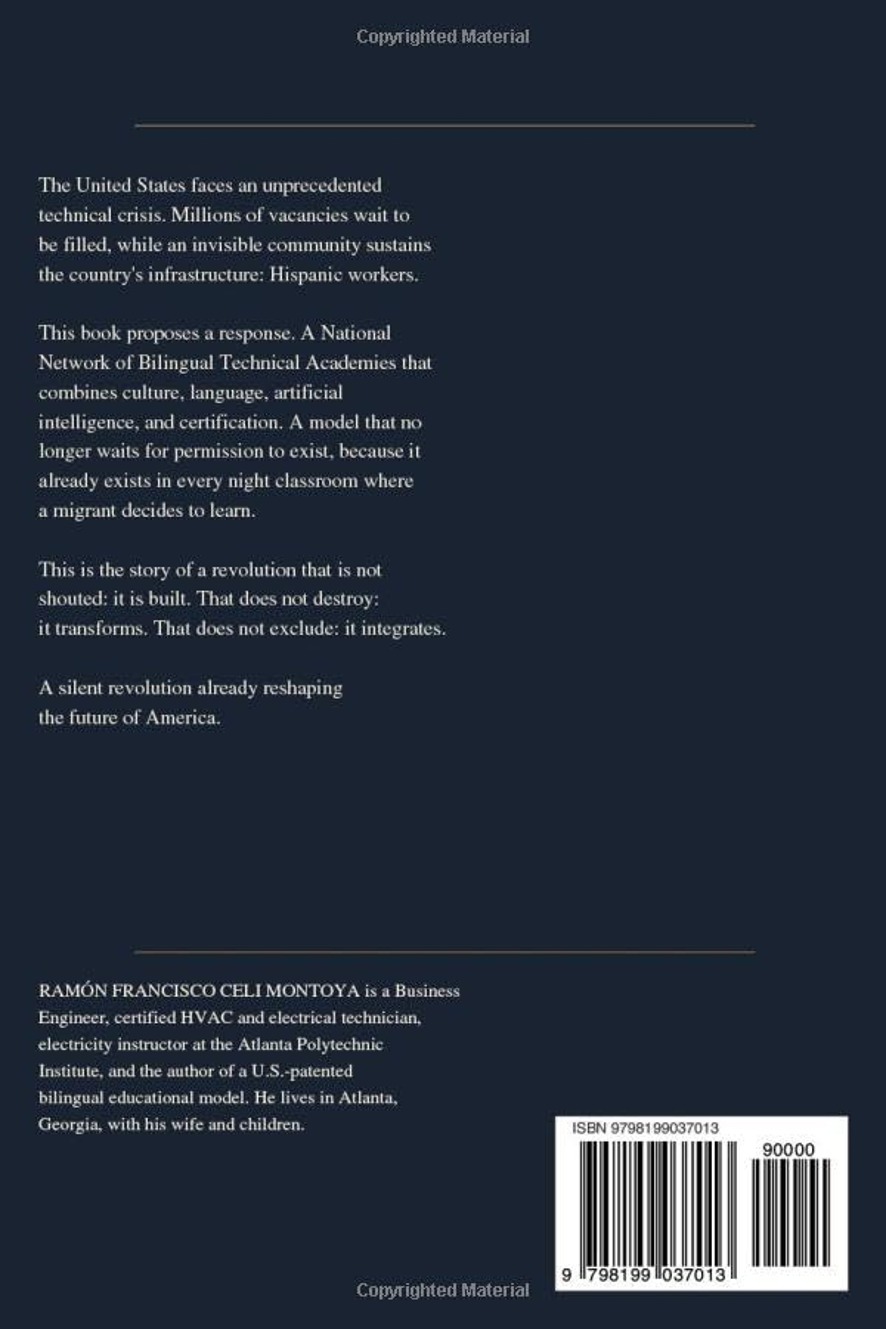
alk onto almost any job site in this country and listen. The work is being coordinated in Spanish. The certification that would let those same workers move up is only available in English. That gap is what The Silent Revolution is about.
Ramón Celi worked as a technician, then a supervisor, then an instructor. He watched the same pattern repeat: talent without recognition, experience without certification, effort without opportunity. The book names that gap and proposes a fix built inside night classrooms with migrant students.
The National Network of Technical Trade Academies combines four things: culture, language, artificial intelligence, and certification. Instruction happens in the language the worker actually thinks in. Cultural context is built in rather than stripped out. AI supports the instructor instead of replacing him. The path ends in a certification an employer recognizes.
This is not a translation service or a theory paper. The model came out of real classrooms where migrants decided to learn anyway, and it was refined until it became replicable. It is now protected by a patent registered in the United States. The book explains how it was built and how it can be scaled.
Written for workers, employers, instructors, and policymakers who already know the shortage is a language problem in disguise. Every chapter names the barrier, describes the workaround, and lays out what changes when the system is designed for the people already doing the work.
The essentials
Digital
Registered Model
Six arguments that reframe the shortage
The book runs 85 pages built around these six central arguments. Each one is drawn from years on the site, in the classroom, and inside the migrant workforce that keeps American trades running.
-
The Talent on the Site
The industry describes a talent shortage while the talent is standing on the site. What's missing is not ability, and it's not willingness. It's a road between the two ends.
-
Language Is the Real Barrier
A technician who can diagnose a failing compressor by sound can fail a written exam about that same compressor. That is not a knowledge gap. It is a language gap wearing a knowledge gap's clothes.
-
The NNTTA Framework
Four things combined: culture, language, artificial intelligence, and certification. This is what turns instruction into a path an employer recognizes and a worker can walk.
-
What Changes for the Worker
A ceiling turning into a staircase. Experience becomes documented skill. Documented skill becomes a wage that reflects it. The book maps every step of that shift.
-
What Changes for the Employer
A hiring pool that already understands the work, already shows up, and can now be certified for it. The people filling those open positions are often already on the payroll.
-
A US Patent-Protected Model
The framework is not theory. It came out of night classrooms, was refined until it became replicable, and is now protected by a patent registered in the United States. The last chapter explains how to scale it.
A note from the author: this book is a testimony and a working proposal. Read it in a sitting or two, then decide who on your team, your crew, or your school should read it next.

Ready to start reading?
The book is available in softcover and digital. Send a message and the author will confirm formats, bulk orders, and delivery options for your organization or team.
Request the Book
Softcover or digital, single copy or bulk. Send your details and the author responds directly.
Send your requestAsk About the Model
Questions about applying the NNTTA framework at your school, company, or training program? Contact the author directly.
Start the conversationBulk orders for schools, unions, or contractors? Send your question